We’re Here to Help!

Trends, Threats, and Predictions for Cloud Security in 2025
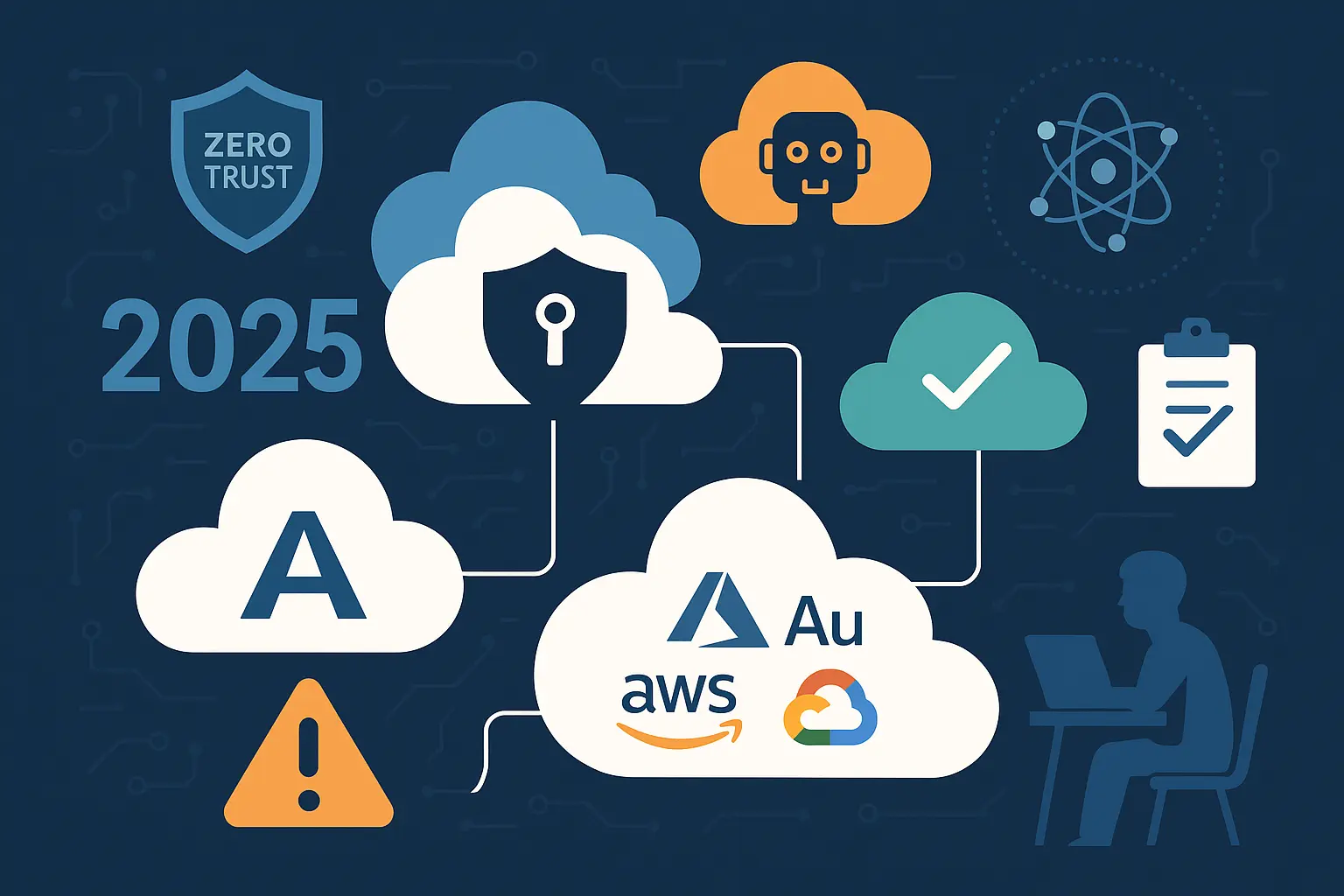
2025 is becoming a key year for cloud security as cloud computing keeps changing the digital scene. Rapid adoption of multi-cloud settings, AI-driven workloads, and remote-first operations has created evolving threats as well as unmatched possibilities. To be safe, companies have to keep ahead of the curve—not just reacting to dangers but also anticipating and getting ready for them.
This blog article will look at the main trends, significant risks, and audacious forecasts influencing cloud security in 2025.
Cloud Security Trends (2025)
- Standard Zero Trust Architecture
From buzzword to norm, Zero Trust has evolved. More companies are putting Zero Trust ideas—”never trust, always verify” into practice as they move to hybrid and remote work. Now basic components of cloud security plans are:
- Identity and access management (IAM)
- Device posture checks
- Micro-segmentation
- Cloud Security: AI and ML
Though it’s a double-edged sword, cloud security now revolves around artificial intelligence.
- From the defensive perspective, machine learning algorithms identify threats more quickly and automate incident responses.
- Conversely, criminals are using artificial intelligence to create more evasive phishing attempts and malware.
- Cloud-Native Security and Security-as-Code
DevSecOps is growing. Using:
- Infrastructure as Code (IaC)
- Automated compliance scans
- Policy-as-code technologies
Companies are incorporating security early in the development lifecycle. This “shift left” strategy lowers vulnerabilities before apps even reach production.
- Complexity of Multi-Cloud
Many cloud providers are being used by companies more and more, which offers adaptability but also complexity. A major difficulty in 2025 will be:
- Maintaining uniform security rules
- Ensuring compliance
- Achieving visibility across AWS, Azure, GCP, and others
- Post-Quantum Cryptography Approaching
Cloud providers and security teams are starting to play with post-quantum encryption methods to future-proof sensitive data as quantum computing develops steadily.
2025 Threats to Watch
- Cloud Supply Chain Attacks
Threat actors are more and more going against cloud dependencies and third-party software.
- Compromised APIs
- SDKs
- Container images
These can create weaknesses in whole ecosystems.
- Cloud Ransomware-as-a-Service (RaaS)
Groups of ransomware have become cloud-native.
- Attackers in 2025 run attacks
- Encrypt cloud-based data
- Extort companies with multi-million-dollar demands using RaaS systems stored in the cloud
- Services That Are Misconfigured
Misconfigurations continue to be the most usual fundamental cause of breaches notwithstanding all developments.
- Simple errors like an open S3 bucket
- Excessively permissive IAM role
Can cause terrible data exposure.
- Shadow IT and Insider Threats
Remote employment and BYOD culture have increased the attack surface.
- Employees might accidentally use unapproved cloud services, hence endangering critical information
- Malicious insiders still pose a major worry as well
- Artificial Intelligence-Driven Social Engineering
- Deepfake videos
- Synthetic voice conversations
- Hyper-personalized phishing emails created by artificial intelligence
These are increasing the credibility and stealth of social engineering attacks.
Forecasts for Cloud Security in the Future
Prediction 1: Cloud Compliance Will Be Real-Time and Ongoing
Manual audits are fading away. Regulated sectors like finance, healthcare, and government will require:
- Continuous compliance monitoring
- Enabled by cloud-native technologies and real-time alerting
Prediction 2: Across Environments, Cloud Security Will Be Unified
Expect more Unified Cloud Security Platforms (UCSPs) offering:
- End-to-end visibility across public, private, and hybrid environments
- Reduced tool sprawl and blind spots
Forecast 3: Artificial Intelligence-First Threat Response Will Be Self-governing
Artificial intelligence will increasingly enable security operations centers (SOCs) to:
- Identify events
- Automatically react by isolating tasks
- Terminate harmful processes
- Notify teams in seconds
Prediction 4: Cloud Security Controls Will Be Required by Cyber Insurance
To underwrite policies, insurance companies will need:
- Rigorous following of cloud security best practices
- Encryption
- Access control
- Third-party risk assessments
Prediction 5: Cloud Security Talent Will Be in Higher Demand Than Ever
As threats change, the need for knowledgeable cloud security experts will exceed availability.
- Salaries should increase
- Cloud-specific skills should be more prized
- Certifications like CCSK and CCSP will grow in demand
Last Reflections
Cloud security in 2025 is about resilience, agility, and foresight not only defense. In this ever changing world, companies that welcome automation, implement Zero Trust, and spend money on cloud-native security will be most suited to flourish.
How Threat Hunting Strengthens Cloud Defense Strategies
Cloud threats don’t wait for you to find them. They hide. They move fast. That’s why smart businesses use threat hunting services to remain ahead. Consider this: most security tools function similarly to alarm systems that sound when a break-in occurs. Threat hunting? It’s more like having a detective who searches for clues before anything bad happens. In Australia, businesses are catching on quick. They’re bringing in experts who dig deep into their cloud systems, looking for sneaky attackers who slip past regular defenses. It’s not just scanning. It’s actively searching, asking “what if,” and finding problems you didn’t know existed.
Here’s the thing about Threat Hunting Service Australia teams: they know local threats inside out. They understand how attackers target Aussie businesses specifically. These hunters use real intelligence, not just automated alerts that cry wolf every five minutes. They spot weird patterns. Unusual logins at 3 AM. Data moving where it shouldn’t. Small changes that mean big trouble later. By adding threat hunting to your cloud defense, you’re not playing defense anymore. You’re hunting the hunters. And honestly? That’s exactly where you want to be in 2025.